Tag: Poh Ling Yeow

  • Incredible Poh-tential For A Perfect Persimmon Season

    Incredible Poh-tential For A Perfect Persimmon Season

    Excellent growing conditions fuelled by lashings of sunshine and ample water supplies, thanks to previous wet seasons, have paved the way for a bountiful crop of quality fruit with high sugar levels, excellent flavour and a strong shelf life.

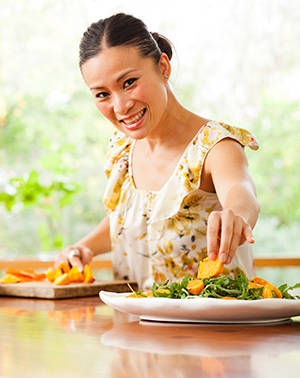
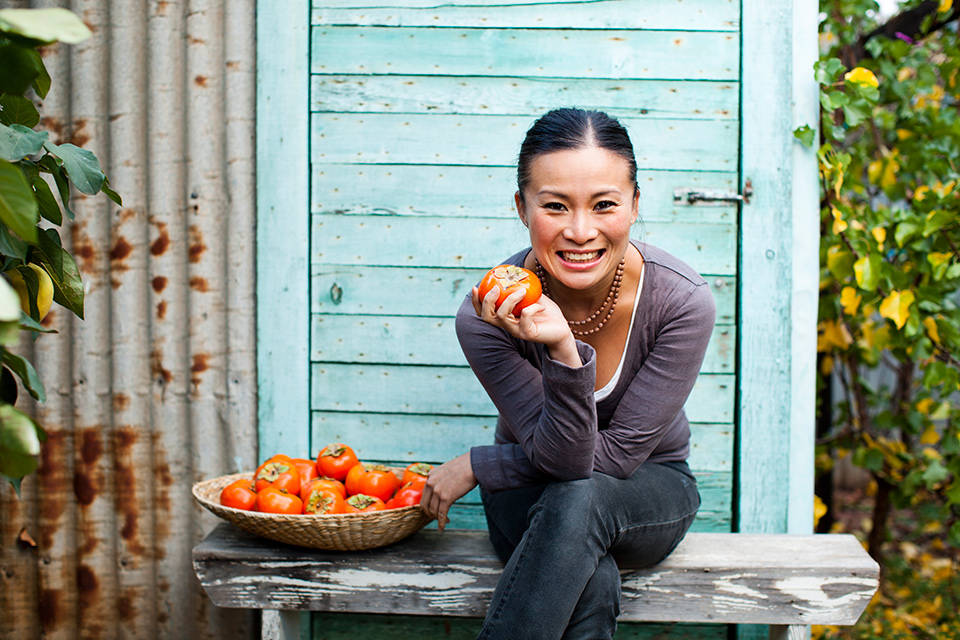
    One person impatiently anticipating the harvest of the yellowy-orange orbs is Poh Ling Yeow, persimmon-lover, presenter of ABC’s Poh Lends a Hand, best-selling author and MasterChef all-star.

    “Despite the fact that persimmons have been grown here for decades, many Aussies are yet to try this exotic fruit, so this season I’m challenging everyone to be adventurous and give them a go. Persimmons truly are the perfect addition to your autumn eating agenda offering an almost indescribable subtle, sweet flavour and fantastic textures to boot,” she said.

    Poh said she grew up eating sweet persimmons, which are best devoured crunchy and firm like an apple, but now also enjoys the original variety, which is ready for eating when the flesh is soft, jelly-like and sweet.

    “I think the best way to enjoy persimmons is fresh. I like to peel and quarter the sweet type as it’s a brilliantly clean, tasty and healthy snack. With the original, I love to tear or cut away the calyx, or the top, then scoop into nature’s little bowl of ready-made, sweet, silky jelly.”

    “Persimmons also make an amazing addition to salads, adding a delightful crunch and sweetness, and team well with strong cheeses, bitter leaves and nuts. Soft, gooey original persimmons or sweet ones that have gone beyond their firm stage are also great for cooking – just pop them into a cake or muffin mix for an autumnal update to your traditional baked goods,” Poh said.
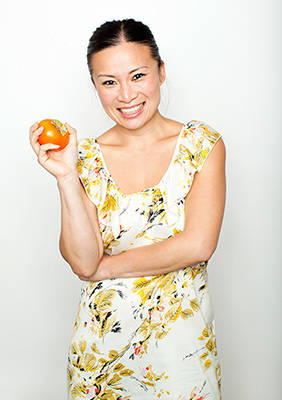
    Along with their flavour credentials, persimmons have double the dietary fibre of apples, are high in anti-oxidants and are an excellent source of Vitamin C and beta carotene.

    Original persimmons have been grown in Australia for almost 150 years, most commonly as a decorative tree in domestic gardens, and are known for their large, heart-shaped silhouette and colour, which ranges from pale orange to deep red-orange.

    In contrast, the sweet persimmon is round, with a diameter of around 10cm, and has a slightly flattened top. Introduced around 40 years ago, this variety now comprises around 90 per cent of production.

    Approximately 2500 tonnes of persimmons are harvested Australia annually with the bulk of fruit grown in Queensland. Other key growing areas include coastal New South Wales, the Goulburn and Murray Valleys in Victoria and South Australia as well as some areas of the south west corner in Western Australia.

    Media Contact: Edwina Brook, Crossman Communications, 02 9361 6099 or edwina.brook@crossmancommunications.com.au
  • Australian Persimmons… Just Poh-fect

    Australian Persimmons… Just Poh-fect

    The recent rains have created favourable growing conditions generating some of the best persimmon tree health seen in years. The golden orchards have now fully recovered from the drought and the growers are predicting an exceptional season full of high quality fruit.

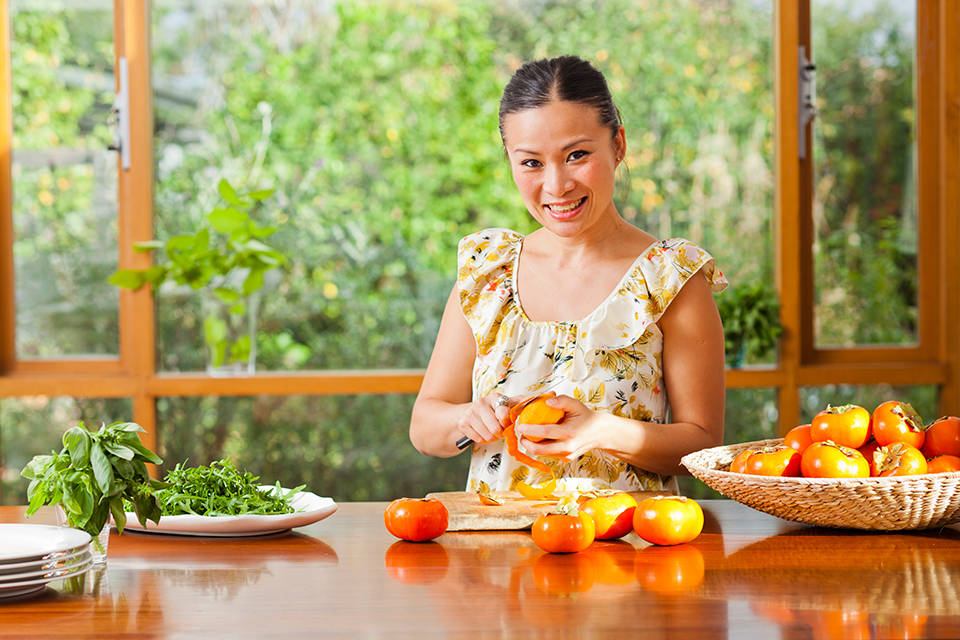
    Poh Ling Yeow, presenter of ABC TV’s Poh’s Kitchen, best-selling author and first runner up of the 2009 Australian Masterchef series, can’t get enough of the autumnal fruit.

    ‘Persimmons are considered a delicacy in my family and I always relish the moment when the season comes around,’ Poh said. ‘I grew up eating the sweet variety and only discovered original persimmons when I came to Australia from Malaysia in 1982.’

    ‘The two persimmon varieties, sweet and original, are often confused as one but they really do differ in taste, texture and appearance. Sweet persimmons are round and stout with a slightly flattened top like a tomato and can be eaten like a crunchy apple but the original kind is a larger, more elongated, heart-shaped fruit and eaten only when it is completely ripe and the flesh is soft and jelly-like,’ she said.

    Poh said despite treasuring the fruit since she was a child, persimmons are still largely unknown in Australia.

    ‘Both varieties of persimmons have such a beautiful, unique flavour that forever eludes me to describe, so people just need to be adventurous and try one,’ she said.

    Poh believes one of the best ways to eat the sweet variety is when they’re crunchy and fresh, peeled and quartered.

    ‘Persimmons are very versatile in the kitchen and their unassuming sweetness marries brilliantly with flavours like smoked poultry, cured meats, cheese, nuts and bitter salad leaves. They also go very well in South-east Asian style salads, as the ‘sweet’ element, together with hot, sour and salty,’ she said.

    ‘My favourite autumn recipe involves mixing the pureed, gooey fruit from an original persimmon through muffin or cake batter for a delicious flavour combination,’ she said.

    The golden orange gems are a good source of vitamin C and beta carotene, fat free and high in fibre. In fact, a sweet persimmon contains almost twice the amount of dietary fibre in an everyday apple and has higher levels of many minerals and antioxidants.

    Original persimmons have been cultivated in Australia for almost 150 years but the sweet variety was only introduced in the late 1970s. Whilst the market here is still young, the oriental charms have been grown for thousands of years, considered native to China, Japan, Korea, Burma and the Himalaya.

    Approximately 2500 tonnes of persimmons are produced in Australia annually with Queensland the highest producers. Other key growing areas include coastal New South Wales, the Goulburn Valley in Victoria and the Murray Valley in South Australia as well as some areas of the south west corner in Western Australia.

    Health data sourced from: Gorinstein, S. 2001, “Comparative Contents of Dietary Fiber, Total Phenolics, and Minerals in Persimmons and Apples”, Journal of Agriculture and Food Chemistry, vol. 49, no. 2, pp. 953-955